
St. Paul’s marks 125 years in Hanover
German families began coming to the Hanover area in 1855, clutching weathered photos, creased letters, and precious documents in a language third-generation descendants cannot read, and a strong, hardened attitude with the purpose of carving out a better life.
Segregated by Religion and Ethnicity
The conservative Lutheran majority, like many German Catholics, clung to the German language and culture believing it the best way to preserve religious orthodoxy. No one seemed to have felt any religious friction between the Methodists and the Lutherans; however, St. Michael was another story, as it was predominantly Catholic.
Numerous elders, most long passed, had distinct memories of growing up surrounded by attitudes that the Germans should not associate with other ethnic groups in surrounding towns, and the Lutherans certainly didn’t go into St. Michael. It is believed this attitude began changing around 1939. It was rare for someone from Hanover to be in St. Michael and vice versa. In addition, it was common for the Lutheran ministers and Catholic priests to speak from their pulpits back then being very direct with their message that they should not venture into the other’s town, do business with them, or allow their children to date someone of the opposite religion.
Lutherische Paulus Gemeinde
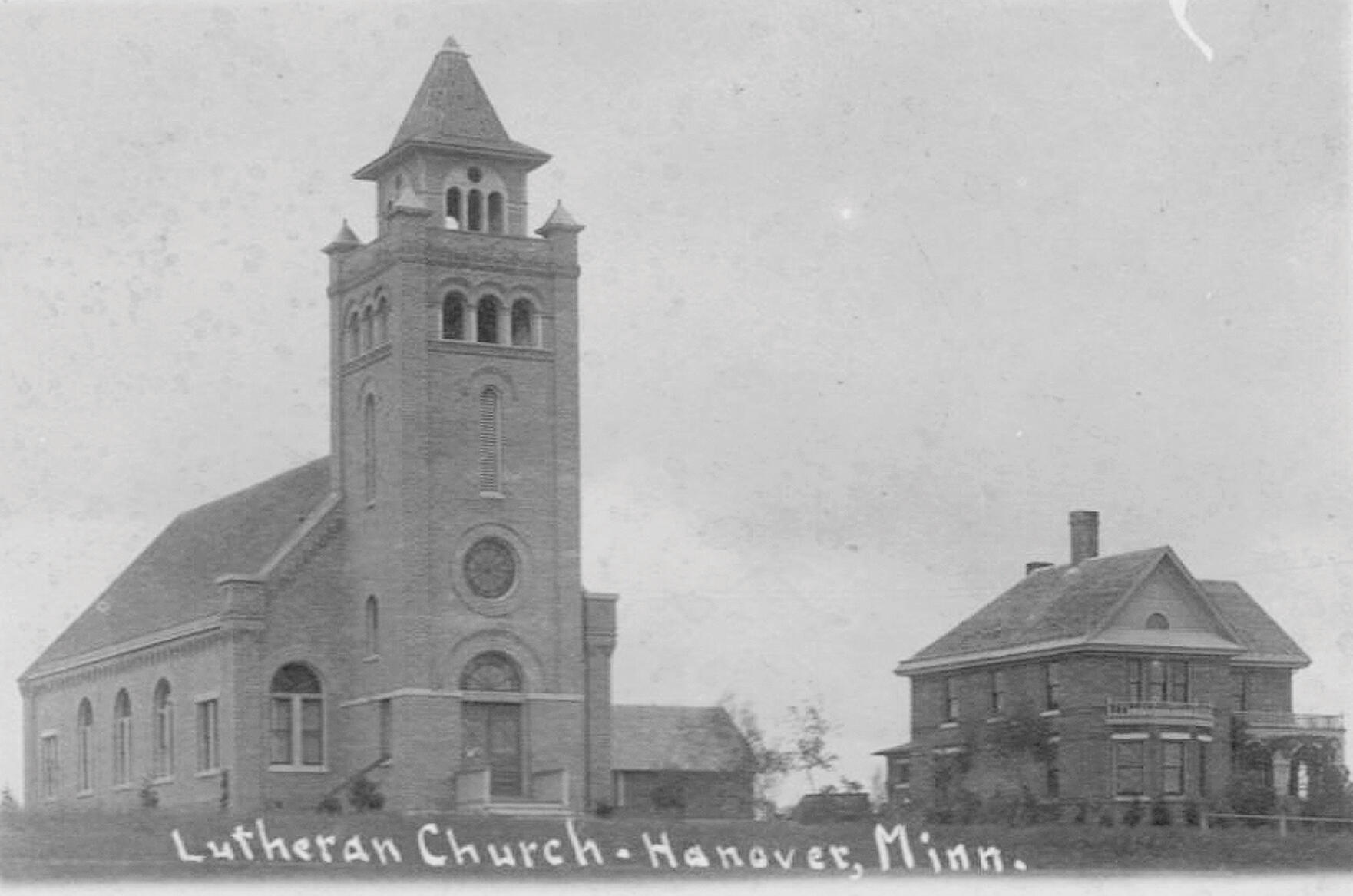
Following organizational meetings beginning in mid-1900 when St. Paul’s Lutheran Church officially began, construction of the brick 32x46-foot church was finally complete in June 1902. The church initially became a member of the Lutheran Synod of Ohio. Reverend William Beiswanger served full time as the first pastor – for thirty-five years – until his death in 1938.
Planning for the parsonage began late in 1903 under the direction of the construction committee consisting of Herman Vollbrecht, Ferdinand Diethert, and Henry Kottke. Diethert, who owned property next to the church, sold one-half acre to St. Paul’s and construction began in early 1904. The brick parsonage was completed in the fall of 1905.
A barn and stable were added, since after all, the pastor would need a horse in order to keep up with his duties in the growing community, as well as to help with neighboring congregations as needed.
According to Lift High the Cross, St. Paul’s centennial book commemorating 1900-2000, “there was interest and concern for the spiritual welfare of the children of member families and provision was made for instruction in Lutheran doctrine. By June 1902, action was taken to establish a church school for a two-month period during the summer, and Sunday school classes were held following church services.” Church ledgers indicate in 1902, St. Paul’s had thirty communicant congregational members. Membership grew steadily through marriage and subsequent baptisms.
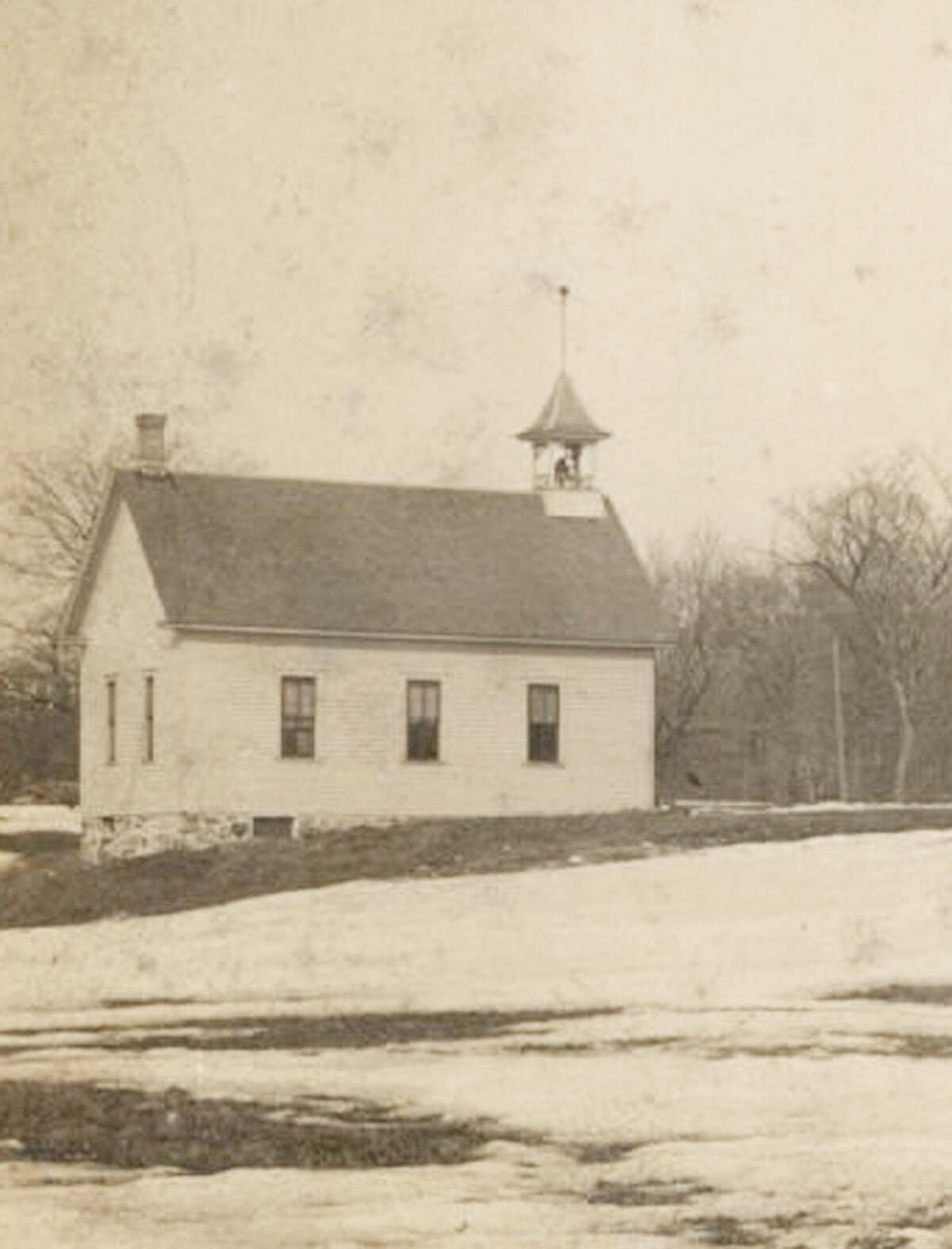
In January 1912, the congregation voted to build its own parochial school. Richard Saenger donated one-half acre of his land adjacent to the church property. Here the 24x32-foot framed German school was constructed and remained in use until 1949, when it was sold on sealed bid.
German Services
Sharing a common heritage, the German language was naturally reflected in church services, school instruction, and business transactions. “This continued uninterrupted until 1928,” states Lift High the Cross, “but as the congregation grew, adding new members with diverse backgrounds, and as children of the congregation no longer developed facility in the German tongue, adjustment became necessary.” That adjustment was to conduct a service in English on the last Sunday of each month. English hymnals were added in 1939, and by 1940 church service ratio was two services in English to one German service. German services continued to decline until 1957 when the final service on Good Friday that year was conducted in German.
Emil Bethke and his family attended St. Paul’s when services were still in German. According to Bethke, in a 2003 interview with me, during the 1920s, the language began changing. “I remember when the church celebrated its 25th anniversary; it was about that time that English started coming in. One Sunday, it would be in English, and the next Sunday in German. It went like that for a while,” recalled Bethke. “Old Pastor Beiswanger came from Germany; it was so hard for him to preach in English.
“The schoolhouse across the road, which is a parking lot now, was the German school that had religion classes,” continued Bethke. “I attended and was confirmed in 1930 when I was thirteen years old. The ceremony was in German because it was so hard for Pastor Beiswanger to speak English.”
“We went to St. Paul’s, too,” added Mike Vollbrecht in a 2003 interview. “My two oldest sisters and brothers were confirmed in German, but my twin brother and I were confirmed in English. It was too hard for us to pick up the language.”
Olga Sipe remembered well soon after she and her husband were married in 1939, the men sat on one side in church during services and the women on the other. “This one time as we were walking into church, Lester said he wanted to sit with me and not with the men. Everybody stared at us, but gradually it began changing. It was we who started breaking that tradition in our church. It was typical that all these men would sit together while the wives were on the other side struggling with all the kids during the service.”
A Sense of Community
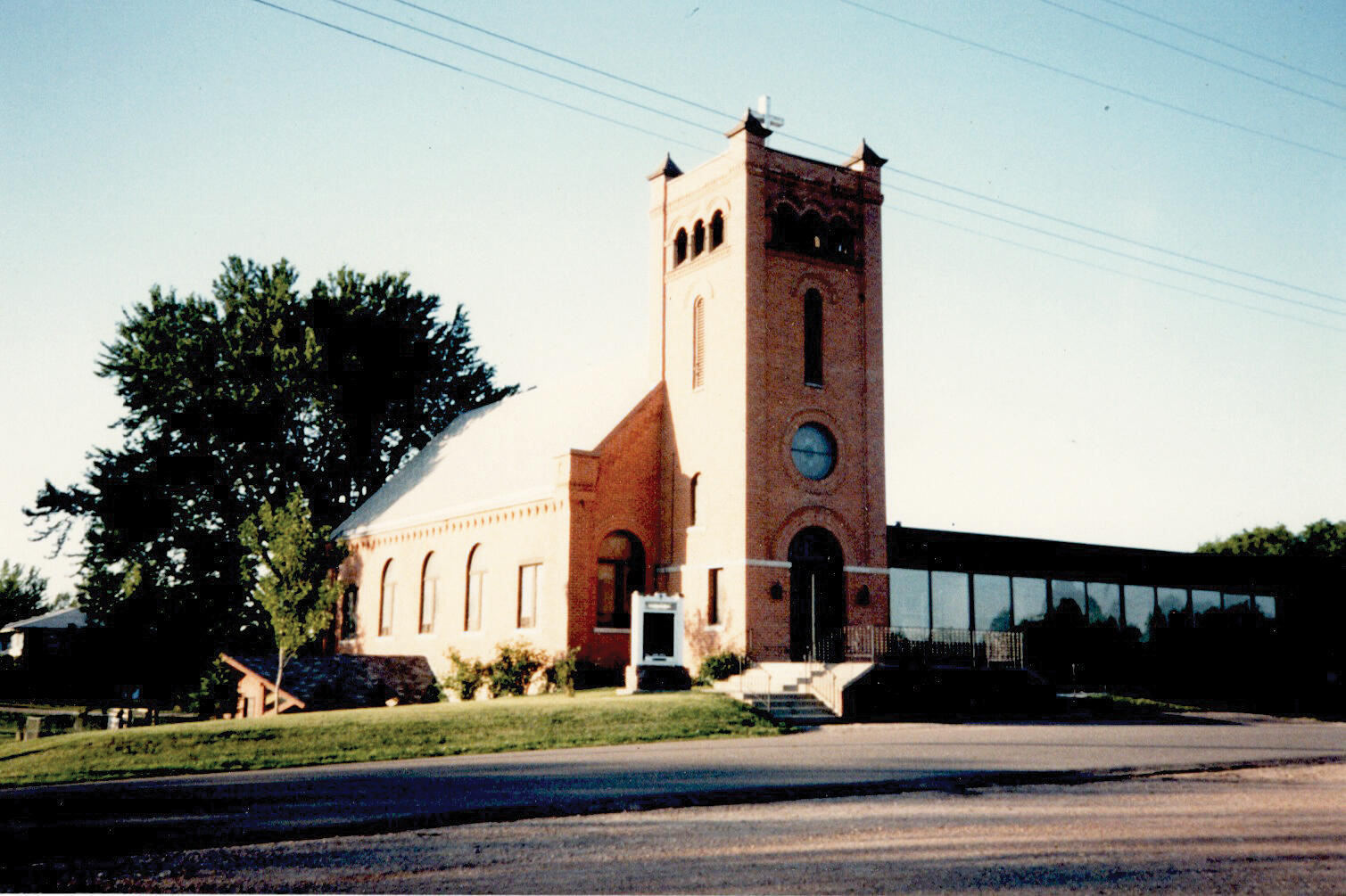
Pastor Luke Schmidt, who has served at St. Paul’s since 2018, cites a unique challenge as a church. “We have this beautiful historic sanctuary that seats about 160 comfortably, and the church is often pretty full for our three Sunday morning services, so growth in numbers isn’t our focus. Instead, we are seeking to be everyday missionaries, being great neighbors and friends, and living out our call by meeting people where they are, and being witnesses and helpers in our daily lives.”
Reflecting on transitions since he arrived, he has noticed new faces becoming part of the church family. “The area is growing and people are looking for a sense of community,” he stated. “I’m incredibly proud of how our historic church with such deep roots has really excelled at creating a space to welcome and engage people coming in from all sorts of backgrounds. Some churches struggle to let new people feel like they have a seat at the table, but we encourage folks to pull up a chair!”
COVID presented challenges, and St. Paul’s was no exception. “We approached it sensibly and took care of each other,” he replied. “Our challenge moving forward is to remain rooted in what holds us together, our focus on Jesus, while not letting all the things that can divide communities and churches tear us apart. I call us a “purple” church, politically diverse, yet knowing that in all the current turmoil we are called to be salt and light and hope and love.”
Sixteen men and their families formed the nucleus of St. Paul’s in 1902. In 2000, St. Paul’s had 325 families and more than 900 baptized members. Today, the congregation has 456 families with more than 700 baptized members.
St. Paul’s history has long been to reach out and serve the needs of its community. One hundred twenty-five years later, that commitment to its mission continues. “St. Paul’s has bucked the trend that plagues lots of historic mainline churches,” explains Pastor Schmidt. “Many are shrinking and dying. Yes, we are in an area of high growth, but I think the people of the church have been amazing in truly being the hands and feet of Jesus. At every church I’ve served, I’ve asked the question, “If this place was plucked out of the community, would the community notice?” In the case of St. Paul’s, that answer is a resounding yes. We are blessed to be a gathering place, a place of hope and help, and a cornerstone of the community for 125 years, and counting.”
Church Milestones
•June 7, 1900, the Lutheran Church Society of Hanover organizes a congregation. New church’s name chosen is Lutherische Paulus Gemeinde (Lutheran Paul Church) of Hanover.
•August 1900 construction begins on the 32’x46’ church. Construction is completed by June 1902.
•Reverend William Beiswanger becomes first full-time pastor in 1903 and serves until his death in 1938.
•First congregant to be buried in the new church cemetery is Frank A. L. Kiphuth, 11 years old, in February 1901.
•First marriage ceremony is November 7, 1902, between Hulda Sitzloff and Albert J. Wagner.
•First confirmation class is March 20, 1903.
•First baptism: Evelyn Ida Carry Bursch, daughter of Robert and Emma Bursch in 1905.
•Brick parsonage completed in 1905. A barn and stable are then added.
•German church school constructed in 1912 across from church. Confirmation classes are in German until 1938; held in the summer for eight weeks.
•Final German church service is on Good Friday, 1957.
•Pre-school center opens in fall of 1973.
•Old parsonage dismantled in August 1979.
•Church addition added in 1980.
•Hanover Area Food Shelf created in 1980. The Clothing Closet begins in 2008.
