
Young Geyen is national racing champion
Gaborik Geyen has been fascinated with machines since he was a toddler. His dad Brandon has a video of him as a two-year-old, whipping donuts behind the throttle of a mini-4-wheeler. It’s no wonder at 11 he’s a national side-by-side racing champion.
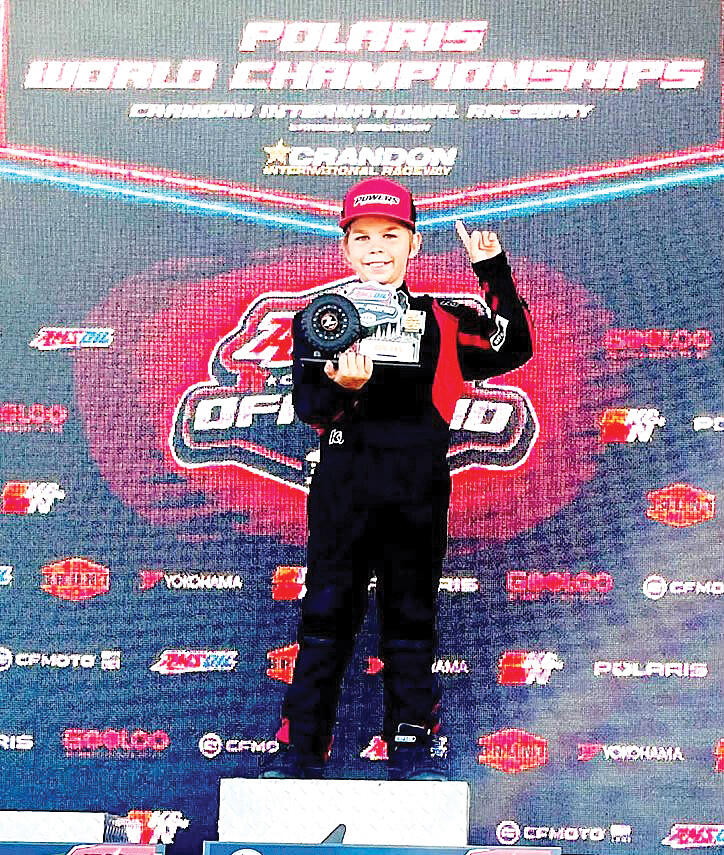
Gaborik is a fifth grader at Maple Lake Elementary School, and this summer he won his first Amsoil Off-Road Racing Championship at International Crandon Raceway.
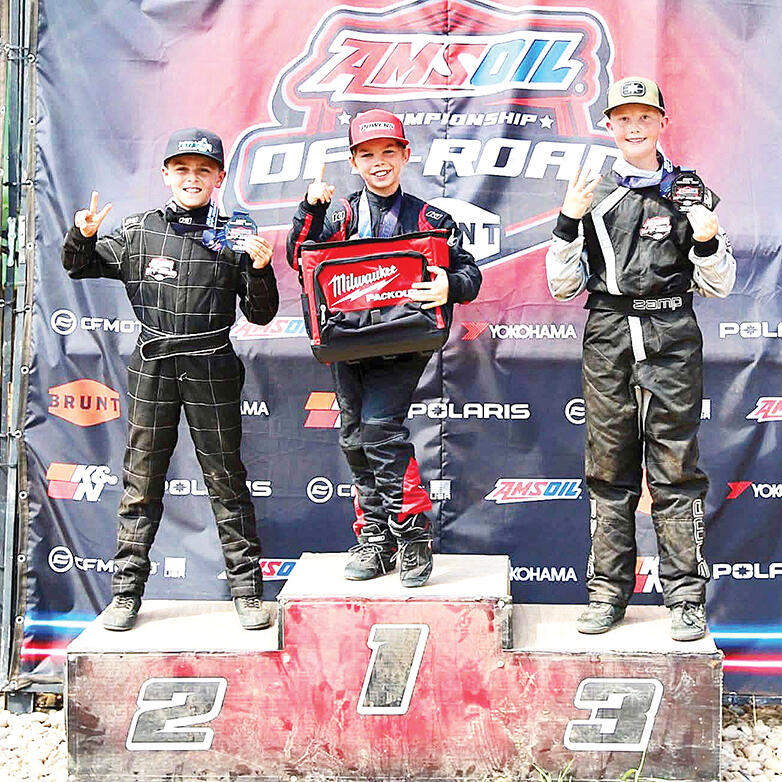
The win ended Gaborik’s third season on the side-by-side racing scene where he made a huge impact for someone so new, climbing the podium 14 times (which is reserved for only top three finishers) including nine wins.
What’s his secret? “Just keep the gas down,” he said.
Gaborik started racing snocross at four years old. He doesn’t remember much of his first race, but his dad does.
“He tipped over on a big bank, but he got back up and kept going. He thought it was great,” Brandon said.
He raced locally until he was six years old when he joined a national circuit and started traveling across the country with a team of professional riders.
He’d miss four or five days of school for every race, so his mom Jayne started homeschooling him. Racing took him to places like New York and the Black Hills. In 2025, he got his first national snocross championship at a race in Duluth.
He became so well known in the snocross world that he could walk into Levi LaVallee’s trailer, and everybody knew him, Brandon said. For those who don’t follow racing, LaVallee is a professional snowmobile racer who has become especially popular on the freestyle scene for his jumps and tricks.
But snocross racing isn’t only cold, it’s dangerous.
Most of Gaborik’s racing buddies have suffered at least one broken bone. Then last year at Deadwood, he was a spectator to the devastating crash that nearly killed professional racer Elias Ishoel.
“It got to the point where we’d being going home from a race and he’d say, ‘well dad, I didn’t get hurt so that’s a good race,’” Brandon said.
When the opportunity came up to buy a side-by-side from a friend, they took it. Last winter was Gaborik’s last snocross ride. He finished his career on a high note, claiming third place in the nation.
Side-by-side racing is very different than snocross, but for a natural like Gaborik, well, it comes naturally.
His first race was at Antigo, Wisconsin. Thirty-six drivers were positioned on the starting line with the rider with the fewest points in the back. Gaborik, being the rookie, had zero points and was positioned last. He somehow managed to work his way up to second place for his first of many podium visits to come.
That was three years ago. This last season - which lasts from May to Labor Day - Gaborik won almost every race, piling up points with each visit to the podium.
His final race of the season at International Crandon Raceway landed him a well-earned second-place finish, but since the championship is determined by points, he was the one who took home the title.
Despite his natural abilities, the move to side-by-side racing wasn’t easy. One of his difficulties was his tendency to oversteer. Gaborik had to learn how to keep the car steady and straight. To do that, he practiced. During the off-season, his classroom was Pro Cart Indoor Racing in Maple Grove where he learned how to use short, steady turns of the wheel.
“He went from wrecking the car a lot last year, to none this year because of all the practicing he did,” his dad said.
Side-by-side racing is also an expensive sport. As snocross racers, the Geyens spent some $3,000 on a motor, which Brandon said they had to replace about three times a season.
Custom fabricating his side-by-side to make it safe and fast, was about $30,000. But making the switch was oh so worth it.
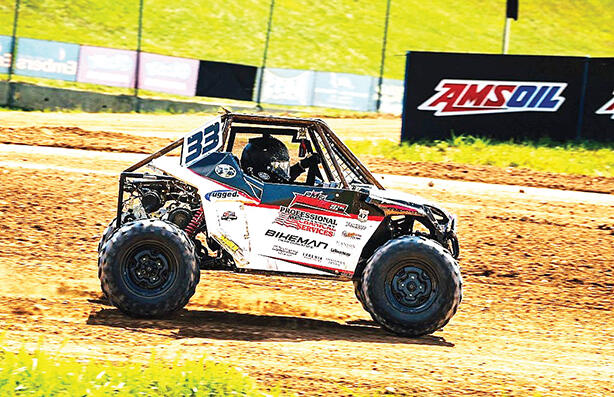
Gaborik’s car is like a mini-Nascar vehicle, with a roll cage, harness, and netting so he’s not tempted to dangle his arm out the window. The biggest danger for Gaborik and other young racers is getting their arms tangled up in the steering wheel during a crash, so they are taught early to cross their arms over their chest if they go into a roll, Brandon said.
Gaborik’s car is specially designed to help him focus entirely on the racetrack in front of him, so much so that he must rely on his dad through a headset to tell him where the other racers are and potential hazards.
It’s made him an efficient racer that announcers have praised for his confidence and taking calculated risks.
The other benefit of making the switch to side-by-side racing, for his parents at least, is this fall he’s back in the classroom at MLE – Gaborik still has mixed feelings about that, but he isn’t looking back.
Next summer, he’ll move up a class, and he’ll get a new, more powerful car. He knows racing in a higher class with a new car will be challenging, but the odds haven’t deterred the confidence of this young rider who said he has his sights set on another championship.
