
Spine-tingling fun with Sisters in Crime
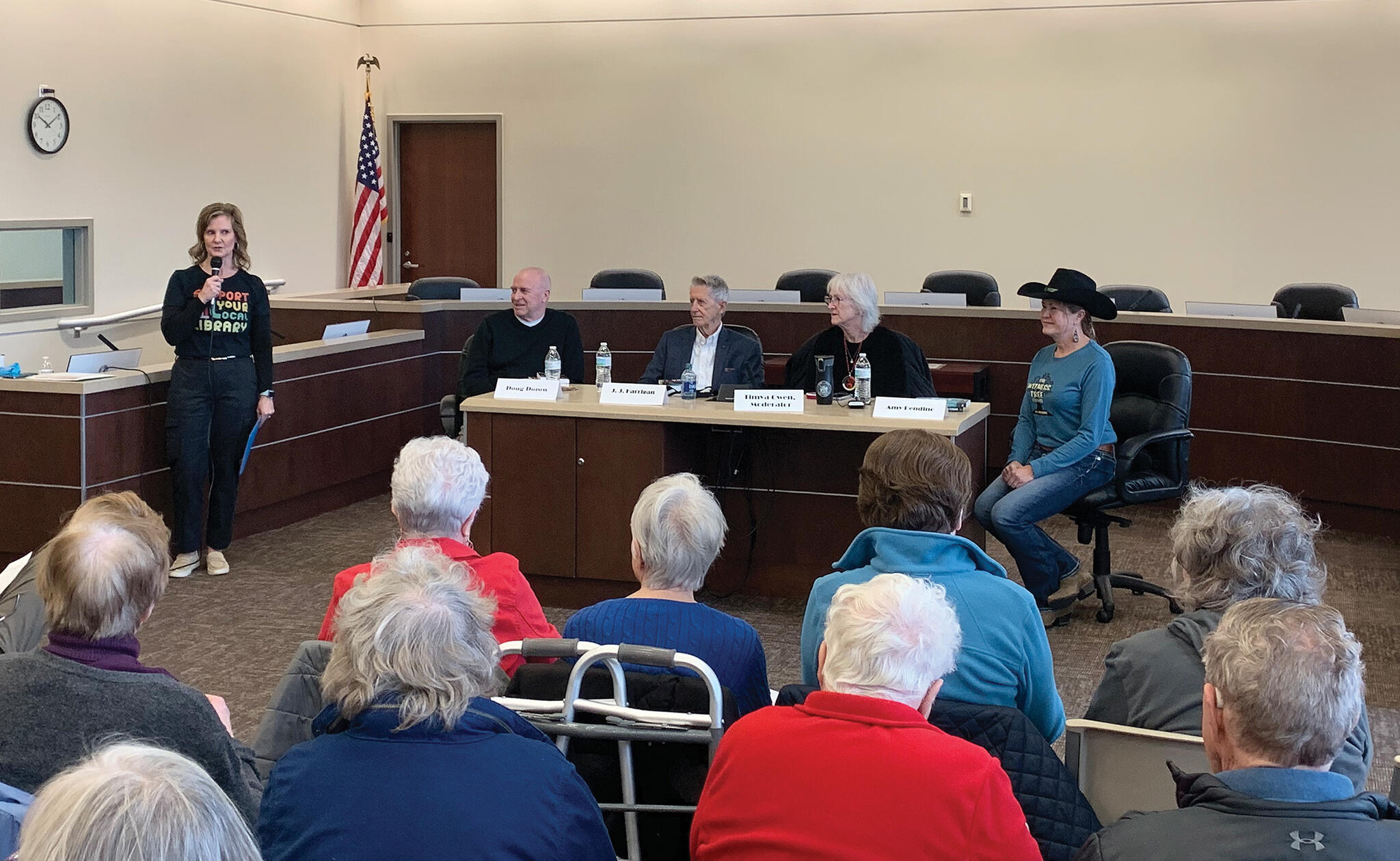
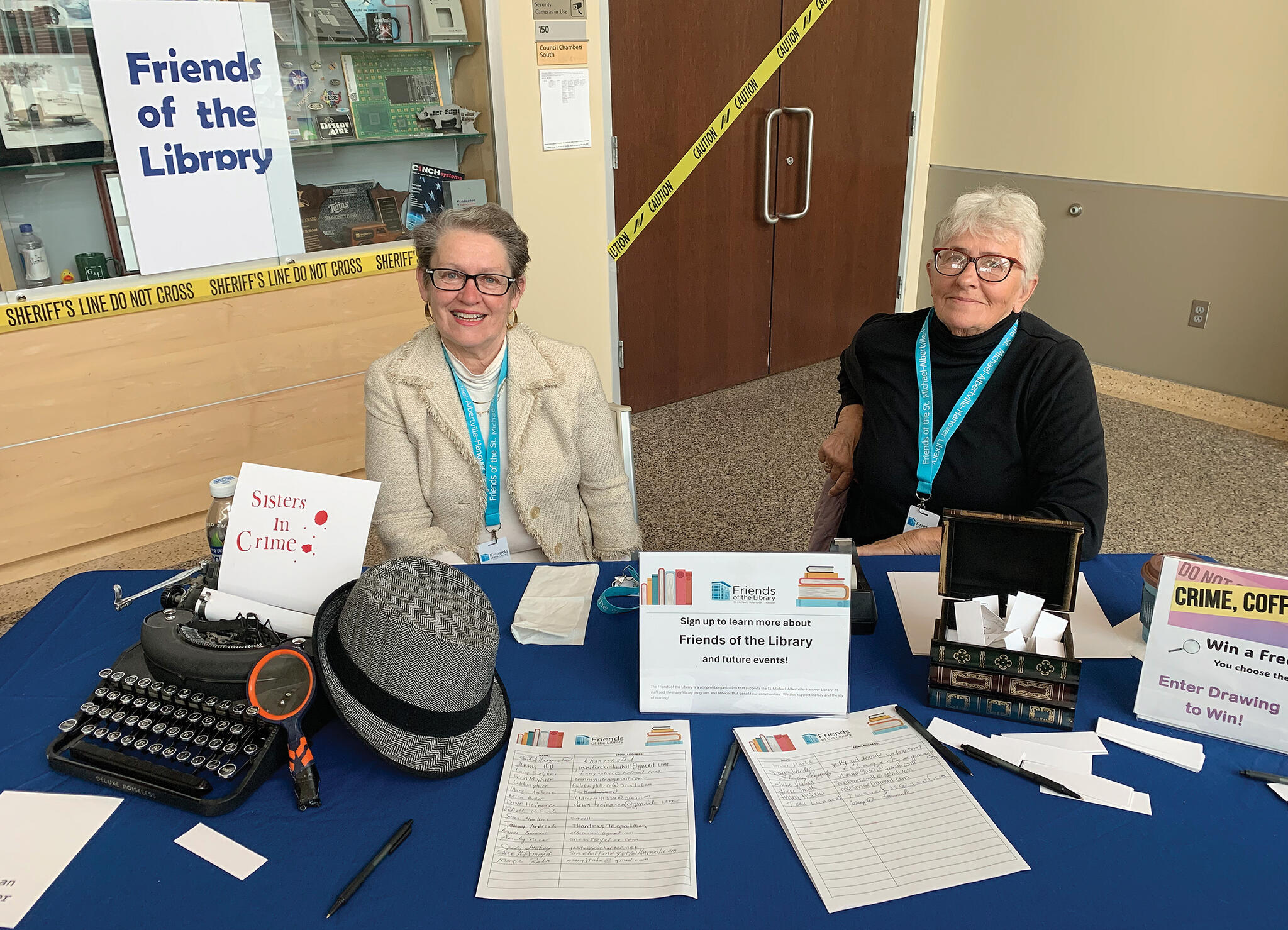
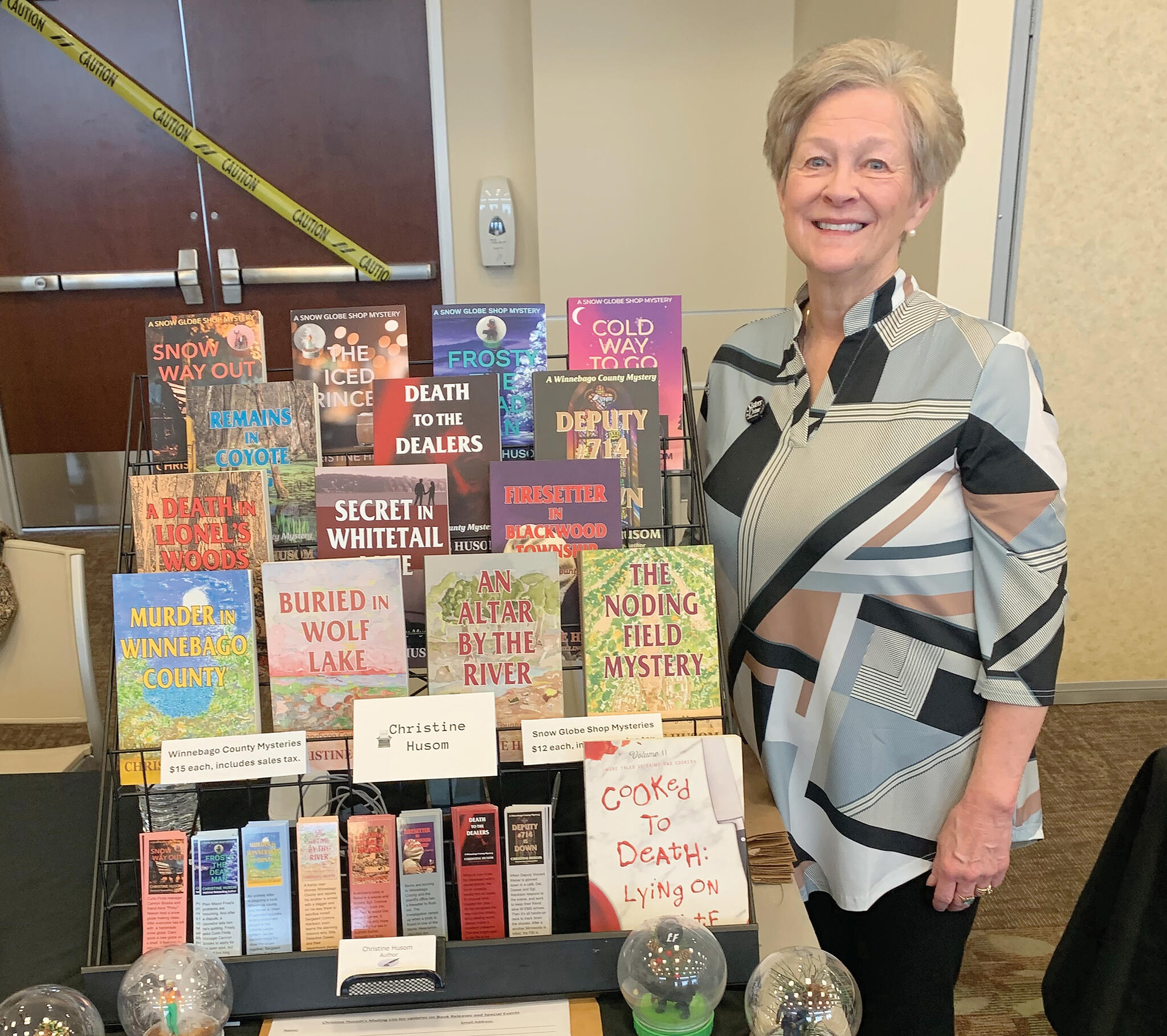
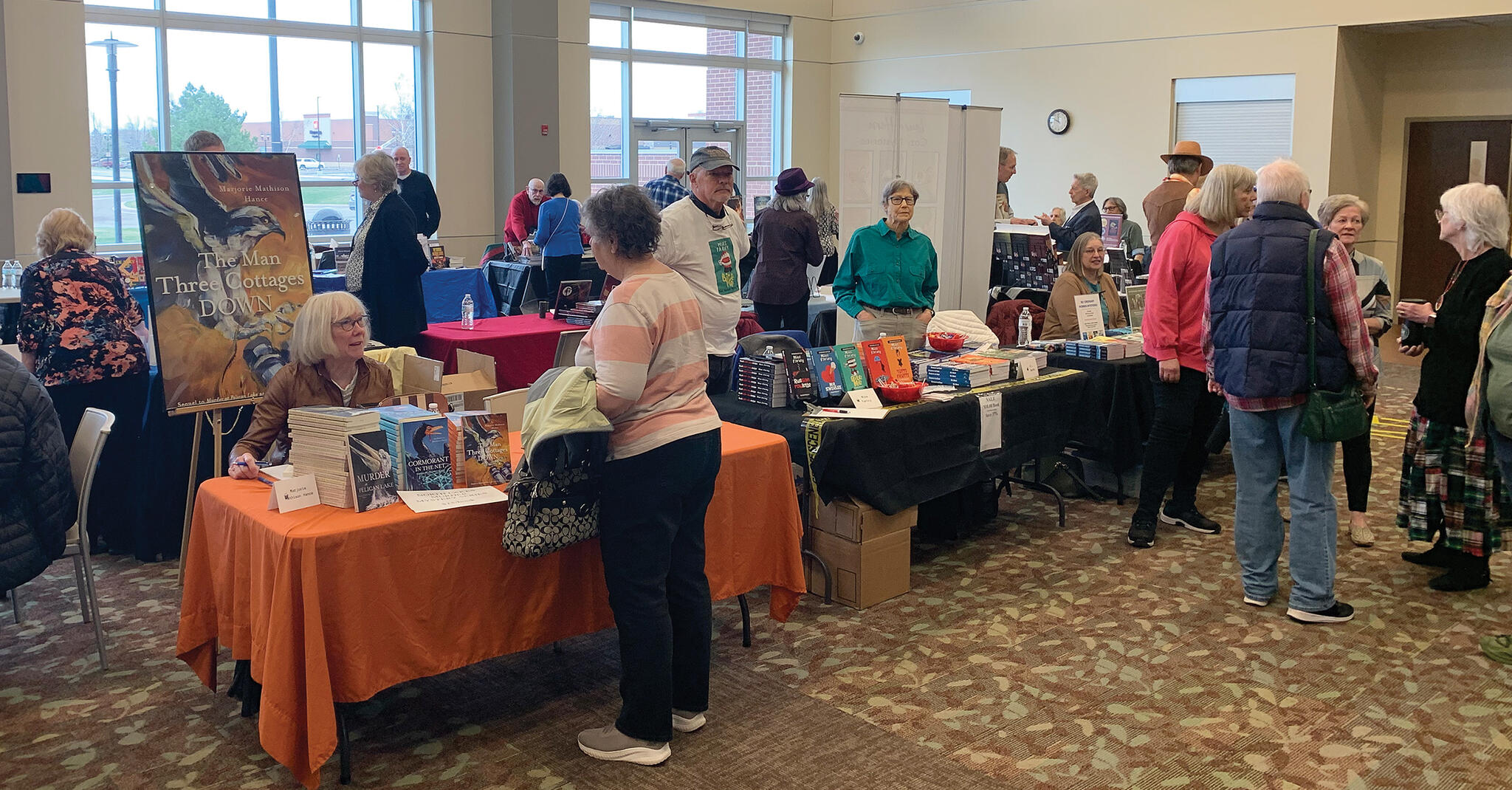
Readers and fans of mystery, crime, and thriller books were in for a treat on Saturday, April 20, at the City Center in St. Michael. The Friends of the Library - St. Michael, Albertville, and Hanover, hosted the Twin Cities Chapter of Sisters in Crime, a community of mystery, crime, thriller, and suspense writers. Thirty-five authors were on hand to meet with readers and discuss books and writing. A panel of four authors shared stories and insights into their individual writing process and the hard work that goes into the creation of a full-length novel; starting with how authors mold and shape an idea into a story with detailed characters and an intriguing plot that keeps readers flipping pages and looking over their shoulder late into the night.
Panel authors discussed two types of writers: “plotters” and “pantsers.” A plotter is a writer who creates a story outline, often consisting of great detail and organization. A pantser is a writer who has an idea floating in their mind and simply starts putting it to paper. Pantsers fly by the seat of their pants. They get an idea for a character or scene and just go with it, letting the creative juices and energy lead the characters to where they want to go. The job of the author is to then go back and edit; rewriting until the final work is polished and pristine.
Author Doug Durow described himself as “somewhere in between,” often writing when time would allow. Durow shared stories of finding coffee shops while his kids were at various sports practices when they were younger, crafting thrilling tales during the limited time he had available.
John Harrigan, author of historical fiction, creates in-depth spreadsheets and detailed plot outlines before he starts writing. “I can’t do what others can do and fly by the seat of my pants.” As an author of historical fiction, he aims to help readers, “Feel what it was like to actually be there.”
Amy Pendino, author of “The Witness Tree,” a small-town thriller set in rural Iowa about a cursed tree that bears witness to generations of human experience; keeps binders full of backstories and details describing character mannerisms, such as how they speak, think, and even how they raise their eyebrows. Pendino creates maps of fictional towns to help her visualize and see through each character’s eyes. The author likes to write early in the morning before starting her day. “The stories are always floating around in my mind and will continue to do so until I write them down.”
The panel of four discussed the importance of beta readers and how they contribute to the manuscript writing process. A beta reader is someone who reads an author’s work before it is published and provides feedback regarding plot holes, character inconsistencies, along with grammar and spelling errors. A keen-eyed beta reader is an author’s greatest tool.
Do you have a story idea swimming in your head? The landscape of publishing has changed significantly over the years, both self- and traditionally-published books now have a place at the literary table. E-books have become a popular alternative to paperbacks and hardcovers. Many software programs are available to help authors format a manuscript that will look professional and put together on an e-reader, tablet, or smartphone. Don’t forget the editor. Nothing can ruin a great story, upset a reader, or cause an agent to hit the reject button quicker than a book full of grammatical and spelling errors. There are many tools, writers groups, and information available to help you on your author journey. Who knows, maybe you’ll be the one to pen the next great American novel.
