
Boundary Waters wildfires: 10 things you can do
UNIVERSITY OF MINNESOTA EXTENSION - www.extension.umn.edu

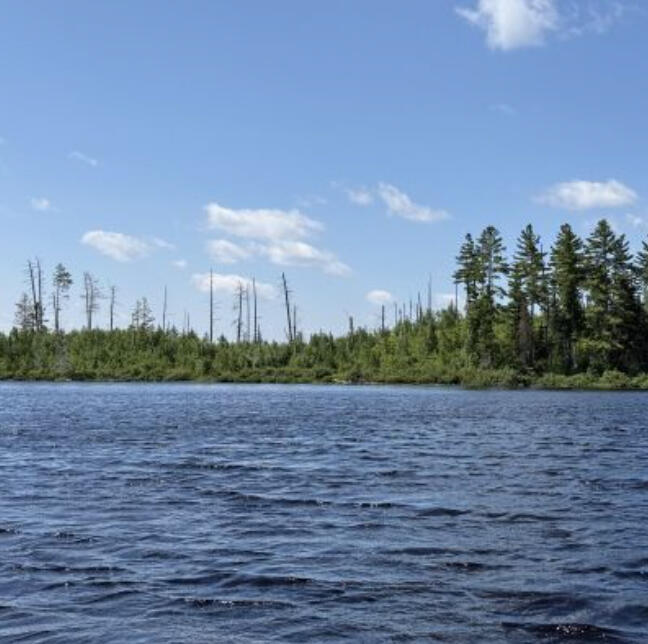
Fifteen years after the Pagami Creek Fire, new growth stands in stark contrast to mature trees at the fire's boundary. Photo: Eli Sagor.
Wildfires in and near the Boundary Waters Canoe Area Wilderness are affecting many Minnesotans. If the news is stirring strong emotions, you are not alone.
It can be difficult to know how to prepare, help others and manage feelings of stress or eco-anxiety — ongoing worry about environmental change or disasters. University of Minnesota Extension offers these 10 steps to help you stay safe, informed and resilient.
Stay safe and prepare
1. Know when to be ready, set and go
If you are near an active fire, learn the Ready, Set, Go evacuation process:
- Ready — yellow: Prepare yourself, your family and your property for evacuation. Make sure that your home is defensible. Remove brush and debris from gutters and around your home. Create an evacuation plan and be sure that all household members are familiar with the plan. Gather all emergency supplies and create an emergency supply kit.
- Set — orange: Be prepared to leave on short notice. Do final fireproofing preparations of your house and start packing your vehicle. Check in with your neighbors to make sure they are preparing as well.
- Go — red: Evacuate immediately when directed. Make sure all household members are accounted for. Close all windows and leave exterior lights on so your house is visible to firefighters in the smoke. Choose the safest evacuation route and head to your designated safe location.
Visit the wildfire evacuation maps for St. Louis County and Lake County for current guidance.
2. Follow official incident updates
Follow updates from the U.S. Forest Service’s Superior National Forest and local emergency management agencies. Rely on official sources for information about evacuations, closures and changing fire conditions.
3. Monitor fire locations
Use InciWeb to find current information about active wildfires, including fire locations, size, containment and response efforts.
4. Check air quality
Wildfire smoke can affect air quality far from a fire. Check AirNow for conditions in your ZIP code, and use Minnesota Department of Health guidance to plan outdoor activities and protect your health.
5. Follow fire restrictions and closure orders
Your actions matter. Do not burn during a burning ban or restriction. Keep drones grounded when firefighting aircraft may be operating, and follow all road, trail, campsite and wilderness closure orders.
6. Reduce wildfire risk around your home
Use Firewise practices to reduce risk to your home and property. This is especially important in areas where spruce budworm has killed large numbers of trees. Remove flammable materials near buildings, maintain defensible space and make a plan before a fire threatens your community.
Support yourself and your community
Eco-anxiety is extreme worry about the environment or climate, and wildfires can absolutely trigger those feelings of fear, uncertainty and stress. The following steps can help you care for yourself and support others.
7. Empower hope and agency
Talk with people you trust about how you are feeling and what actions you can take. If you live far from the fires, take this opportunity to talk with your family about preparing for future emergencies, including fires, floods and tornadoes.
8. Help affected communities
Support local organizations serving communities affected by wildfire. Before donating goods, money or time, check with local officials or trusted community organizations to learn what is most needed.
9. Connect with others
Community connection can help people cope during stressful events. Spend time with family, friends and neighbors. Share a smile, laugh when you can, stretch and take slow breaths.
10. Do something you enjoy
Caring for yourself and others is not a luxury, it's active resilience. Take breaks from news and doomscrolling social media. Draw, listen to music, color, dance, walk or do another activity that helps you reset.
You can help
Hundreds of brave firefighters and emergency personnel from across the U.S. and Canada are working to protect people, property and natural resources. You can support their work by following official guidance, preparing your household and helping your community.
Fire has long shaped northern Minnesota
Fire and people have coexisted in northern Minnesota for centuries. Many native plant communities in the region are fire-dependent, meaning they need fire to regenerate.
The Ojibwe name associated with Burntside Lake near Ely is Ga-na-ba-ne-ia-bi-gi-teiaga-mak, translated as “lake on which one side has burned,” reflecting the long presence of fire on this landscape.
More recent fires, including the Pagami Creek and Ham Lake fires, have shown both the effects of wildfire and the capacity of ecosystems and communities to recover.
Wildfires also have influenced Minnesota’s conservation history. The Minnesota Forestry Association, founded in 1876, is the nation’s first forestry association and the oldest conservation organization in the state. The Great Hinckley Fire of 1894 burned at least 200,000 acres, and was one of the reasons the U.S. Forest Service was created in 1905. The Cloquet Fire of 1918 was the third-deadliest wildfire in recorded history, in which 453 people perished. In response and an outpouring of neighborliness, auto-owning Minnesotans joined the Motor Corps volunteers and helped drive people and goods to save lives and aid recovery.
Minnesotans have responded to past disasters with courage, cooperation and care for their neighbors. That same spirit matters today. We've been through this before and we know what to do.
