

May garden checklist
UNIVERSITY OF MINNESOTA EXTENSION - www.extension.umn.edu

Perplexed about your peonies? Lawn got you down? Tune into our WCCO Radio “Smart Gardens” show on Saturdays, 8-9 a.m., for answers to your lawn and garden questions. Dial in AM 830 on your radio or ask your smart speaker. Or listen to Smart Gardens podcasts when you have the time.

Mystery of the month
What should you do if you can’t identify the plants coming up in your garden?
Find the solution to our mystery at the end of this article.
Pests and diseases
Water the soil, not the foliage! Wet leaves are a prime environment for many pathogens to thrive.
- Use soaker hoses, drip irrigation, or direct hose water at the base of the plant to reduce the spread of soil-borne pathogens like fungal and bacterial leaf spots.
- Mulching the base of plants and immediately removing diseased leaves and stems can substantially reduce disease pressure on many landscape plants.
- Do not add diseased plant debris to a home composting system, as the compost typically does not get hot enough to kill the pathogens.
Read about common plant diseases on landscape plants.
Trees and shrubs
Take notes on spring-flowering trees and shrubs in your neighborhood.
May is a great time to plant woody plants in your yard. Serviceberry is a resilient small tree or shrub with edible berries that attract pollinators and wildlife.
Check out our webpage for more information on selecting trees and shrubs for Minnesota.
Our Plant Elements of Design plant selection tool has information on various serviceberries that perform well in Minnesota. You can also look up plants that flower in spring and match your particular site conditions.
Flowers and other garden plants
Inspect all plants prior to purchase. If you see leaf spots or dark, sunken areas on stems or roots, select a different plant.
Many plant tags will list if the variety is resistant to common diseases like apple scab on crabapple and powdery mildew on phlox and bee balm.
Iowa State University Extension has a great webpage with Tips for Shopping and Selecting Quality Plants.
Watch this Hort Short video on pulling mulch away from perennials.
Houseplants
Fertilize houseplants while they are actively growing from late spring into early fall.
There are two main types of fertilizer: soluble, which can be purchased in liquid or powder form and is immediately available for plants to use, and slow-release, which is typically sold as pellets that break down over a longer period of time.
The more frequently you water your houseplant, the more frequently you may need to fertilize it because some of the fertilizer leaches through the soil and cannot be taken up by the plant. On the flip side, overfertilizing the plants can lead to stunting, leaf drop, and even death. Make sure you follow all directions on the fertilizer label.
Watch our YouTube Hort Short on fertilizer types.
Lawn
May is a great time of year to fertilize our lawns. This can help them fill in any voids created during last fall’s drought or from winter stresses.
When selecting a fertilizer, look for a product with a 3:0:1 ratio. An example of a fertilizer product like this would be a 30-0-8, which contains 30% nitrogen, 0% plant-available phosphorus, and 8% soluble potassium. Only use phosphorus-containing fertilizers if a soil test shows a deficiency or if you are establishing a new stand from seed or sod.
Avoid using “weed and feed” products. Spot treating for weeds is much more effective. When applying the fertilizer, try to time it before a light rain. Finally, use a broom or leaf blower to clean off any sidewalks or other impervious surfaces.
Other tasks
Hardening off transplants is critical for successful plant growth. You can acclimate plants to the outdoors by setting them in shaded, protected areas during the day and bringing them indoors at night if temperatures are predicted to drop below 50°F.
Slowly increase the amount of direct sunlight and wind exposure they receive over the course of one to two weeks. Leaves can burn if the plants are placed outdoors in full sun without being acclimated.
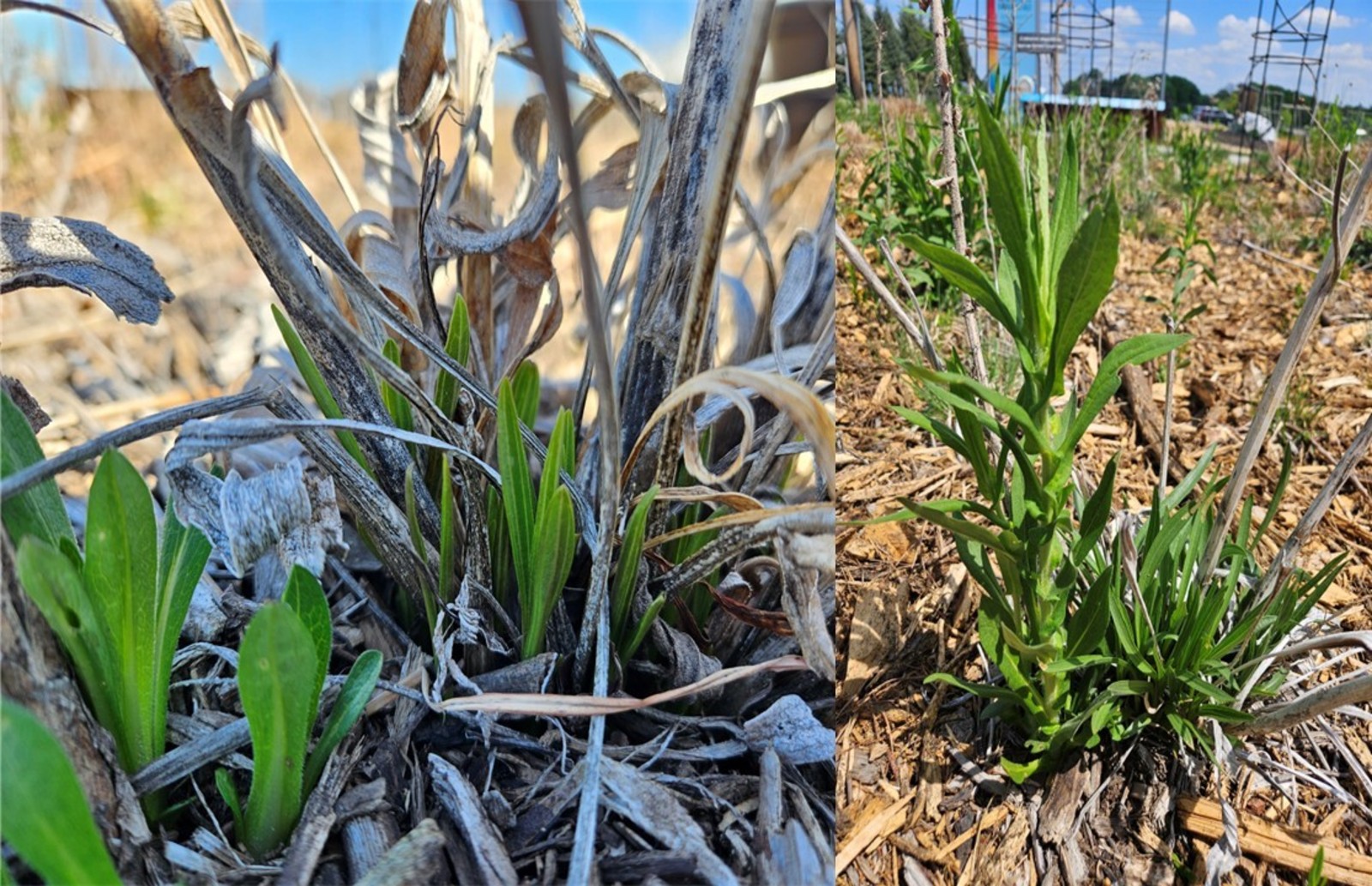
Solution to the mystery of the month
Both of the plants in this picture are perennials. On the left is smooth blue aster, and on the right is pale purple coneflower. They may look similar to common weeds coming up in early spring, like plantain or curly dock.
You don’t want to accidentally pull up a wanted plant in your garden; the best thing you can do is wait until the plants get larger so you can correctly identify them.
See our page on weed identification to help you identify common weeds when they are still small.
