

Fall is a good time to remove buckthorn
UNIVERSITY OF MINNESOTA EXTENSION - www.extension.umn.edu
Common buckthorn. Photo: Leslie J. Mehrhoff, University of Connecticut, Bugwood
If you're dealing with invasive buckthorn on your property, now is the perfect time to take action. Mid to late fall is ideal for applying herbicide, as the plant's sap flows toward the roots, allowing for maximum absorption. Since buckthorn keeps its leaves longer than most plants, you can minimize harm to other species that are dormant for winter.
Introduced to the U.S. in 1849 as an ornamental plant, buckthorn has become a widespread invasive species in woodlands, prairies, fields, bogs, and roadsides.
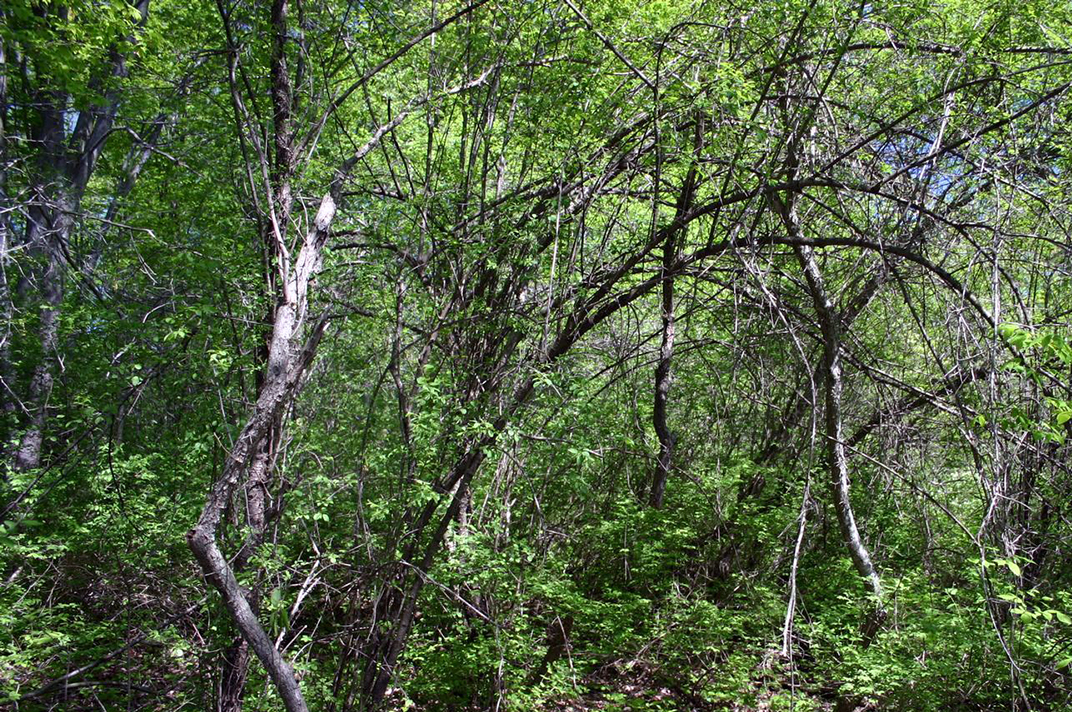
Common buckthorn (Rhamnus cathartica) and glossy buckthorn (Rhamnus frangula) are prevalent in the Midwest, quickly forming dense thickets. Common buckthorn can grow up to 25 feet tall, while glossy buckthorn tops out at 18 feet. Both species have oval-shaped dark green leaves. Glossy buckthorn leaves are, as the name suggests, shinier.
Buckthorn adapts to various conditions, leafing out early in spring and shedding leaves late in fall, outcompeting native plants for sunlight and nutrients. Its berries ripen in late summer and fall, spreading seeds through bird and animal droppings. Once established, buckthorn creates a dense layer of growth that displaces native plants and weakens forest ecosystems.
Controlling an invasive species

Glossy buckthorn. Photo: Leslie J. Mehrhoff, University of Connecticut, Bugwood.org
Controlling buckthorn requires preventive measures and teamwork with neighbors, as wildlife easily spreads the seeds. Small seedlings (less than half an inch thick) can be pulled by hand, especially when the ground is moist.
For larger plants, applying herbicide in the fall is most effective. A 2% glyphosate (Roundup) or 1% triclopyr (Garlon) spray can be used after native plants have gone dormant. Always follow product labels for safety and application directions.
For stems less than 6 inches in diameter, use a basal bark treatment, spraying an oil-based herbicide with 6% triclopyr (like Garlon 4 or Pathfinder) around the stem.
For larger plants, the cut stump method is effective. Cut the plant at its base and apply a concentrated herbicide (20-25% glyphosate) to the stump with a sponge brush. Repeat treatments may be necessary in spring to stop new seedlings.
For large-scale infestations, it's best to develop a multiyear management plan to control all stages of buckthorn growth.
For help identifying buckthorn or other invasive species, contact your local University of Minnesota Extension office. The Minnesota Department of Natural Resources also offers resources.
CAUTION: Mention of a pesticide or use of a pesticide label is for educational purposes only. Always follow the pesticide label directions attached to the pesticide container you are using. Be sure that the area you wish to treat is listed on the label of the pesticide you intend to use. Remember, the label is the law.
